Prospective risk analysis: getting a grip on risks within your organization
Organizations are exposed to risks every day in their processes, projects and operations. Risks detected before they become a problem can help prevent the impact on safety, quality or continuity. A prospective risk assessment (PRI) provides companies with a methodical approach to discovering their potential risks and implementing effective management measures for each. By understanding risks, companies can proactively ensure the safety of their personnel and processes.
What is a Prospective Risk Analysis (PRI)?
A Prospective Risk Analysis is a method to identify, assess and manage potential risks in advance. This involves analyzing potential threats and vulnerabilities within processes, systems or operations based on probability and impact. This analysis provides insight into where risks may occur and what measures are needed to mitigate them.
In practice, this means looking at a process step by step and examining at each step what can go wrong.
Consider, for example, a transfer, control or action in which information is missing or misinterpreted. Naming and prioritizing these risks in advance provides insight into where measures will have the most impact.
“A major benefit of a PRI is gaining insight into threats, vulnerabilities and their impact on the organization.” – protify.co.uk
Why Prospective Risk Analysis is Important
The PRI method, originally from sectors such as the automotive and chemical industries, is now indispensable in various industries. By identifying and assessing risks based on probability and impact, organizations can act proactively to minimize them. Implementing a digital risk assessment leads to improved safety, increased efficiency and a culture of continuous improvement. Custom risk matrices and workflow-driven analyses are often used in industries such as construction, manufacturing and services.
Conducting PRI with LeanForms: The Benefits
LeanForms provides comprehensive support for conducting PRIs:
- Free choice of risk matrix.
- Workflow management: flexible routing based on risk points.
- Time monitoring on outstanding actions.
- Options additions/changes upon advancing understanding.
- Possibility of automatic revision after term (self-adjustable).
- Extensive reporting capabilities.
- History reporting of changed opportunities and impacts.
- Advanced search features.
LeanForms supports organizations in structuring risk analysis and recording risks and actions within processes. This creates one central place where risks, actions and follow-up come together.
FMEA: Digital innovation for stronger risk management
Integrating risk management into standards such as ISO or Wkb requires up-to-date and structured information. Digital solutions help capture, track and structurally improve risks centrally.
The Failure Mode and Effects Analysis(FMEA), developed by NASA and later widely applied in the automotive industry, is a structured method to:
- Identify possible failure modes, causes and consequences
- Analyze and prioritize risks
- Plan targeted improvement actions
Managing an FMEA digitally in an information management system makes risk management a continuous process. This allows you to:
- Induct new employees with current risk information.
- Prepare internal and external audits efficiently.
- Analyze incidents and complaints in a structured manner.
- Continuously optimize maintenance plans and inspection lists based on the latest insights and data.
The benefits of smart risk management
Incorporating risk management into your quality management system provides immediate benefits:
- Competitive advantage through proactive risk management.
- Cost savings due to fewer disruptions.
- Better decision-making based on current data.
- Higher customer satisfaction through better quality of products and services.
Take the step to digital risk management
Do you want to execute PRI smarter and link it directly to your daily processes? With LeanForms you digitize your risk analyses, follow up on actions and continuously improve.
Wondering where there’s room for improvement in your risk analysis and HSE processes? Get practical recommendations tailored to your business.
Frequently Asked Questions
Prospective risk analysis is a method of identifying risks within a process in advance. Instead of analyzing incidents after the fact, you look ahead to what could go wrong and what measures are needed.
A prospective risk analysis focuses on possible future risks. Instead, a retrospective analysis looks back at incidents that have already occurred to learn lessons.
Prospective risk analysis is often applied to new processes, changes or critical work where errors can have a major impact, such as quality control, safety procedures or handover moments.
You analyze a process step by step, identify potential risks at each step and determine the probability and impact. Based on this, you set priorities and determine what measures are needed.
Want to know more? Get in touch
Do you have questions or are you curious how LeanForms can support your organization? We are ready to answer all your questions! Get instant specialized advice on the best solution for your specific situation.

Related items
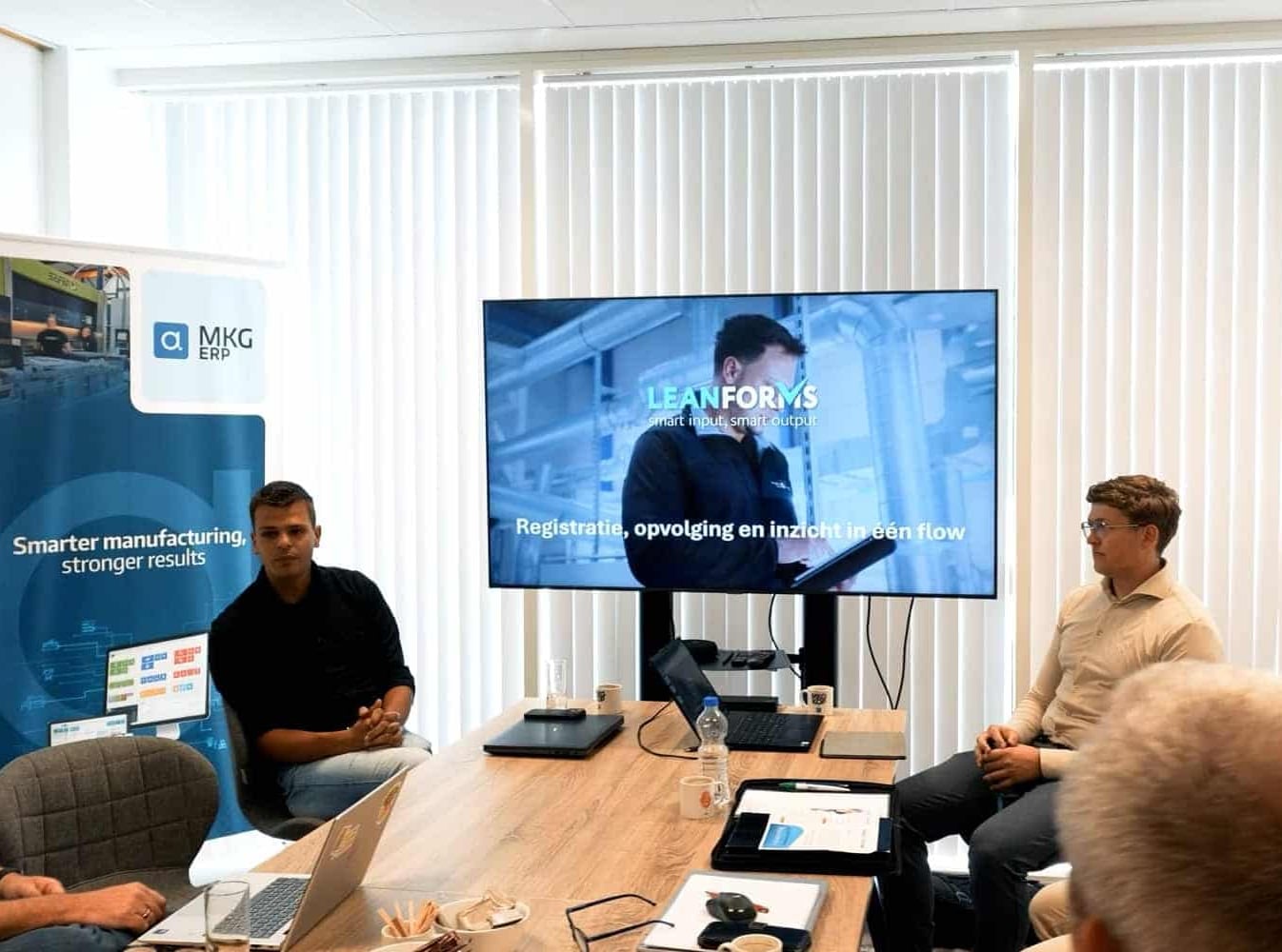
MKG & LeanForms Inspiration Afternoon
When shop floor data, process knowledge, and systems come together, clarity emerges. This interconnection was the focus of the MKG and LeanForms inspiration afternoon on July 1, 2026. At the Brainport Industries Campus (BIC) in Eindhoven, the discussion centered on how to make information from the field immediately usable within your processes.

What is quality management system?
Quality management is a catch-all term for many business owners. It is seen by managers as a necessary evil to hang the certificate on the wall. A proof of good behavior for the customers. However, if the principles of quality management are properly applied, they contribute daily to more efficient operations. And therefore to the bottom line. This is precisely why every organization can benefit from practical quality management. And surely that makes everyone happy.

RI&E: What Is It, and How Can You Turn It Into a Dynamic Tool?
An RI&E—which stands for risk inventory and evaluation—identifies the occupational risks within an organization. An action plan allows you to specify which measures are necessary, who is responsible, and when they will be implemented.

Business continuity management
business continuity management sounds like a “far from my bed show” to many entrepreneurs. Or they prefer not to dwell on it.