RI&E: What Is It, and How Can You Turn It Into a Dynamic Tool?
An RI&E—which stands for risk inventory and evaluation—identifies occupational risks within an organization. The accompanying action plan describes what measures are needed, who is responsible for them, and when they will be implemented. Every employer is required to prepare an RI&E. In this article, you’ll learn how to use the RI&E not only to meet that requirement but also as a tool for risk management and continuous improvement.
But what if you could transform it into a powerful tool for driving improvements within your organization? In this blog, you’ll learn how to strategically utilize an RI&E, link it to quality management, and use digital innovation to create a dynamic tool for improving and continuously optimizing business processes.
The RI&E as a foundation for risk management
Every employer is required to prepare a Risk Inventory and Evaluation (RI&E) along with an action plan. Organizations with more than 25 employees must always have this assessment reviewed by a certified expert. Organizations with up to 25 employees may be exempt from this review if they use a recognized RI&E tool for their industry.
By using the RI&E as a dynamic instrument, companies can not only identify risks, but also structurally control and reduce them. This leads to fewer incidents, a safer working environment and increased job satisfaction among employees. Moreover, a well-managed RI&E can contribute to quality assurance and standardization within the organization.
Standardization as an opportunity, not a burden
Many companies view standards such as ISO 45001 (occupational health and safety) or ISO 9001 (quality management) as an obligation. But when standards are used strategically, they can actually contribute to a culture of continuous improvement. The High Level Structure (HLS) of ISO standards provides a framework that makes it easier to integrate different standards and link risk management to quality management.
The High Level Structure (HLS) is a guideline for the development of new ISO management system standards that largely harmonizes their structure and requirements. ISO’s goal with the HLS is to ensure uniform use of core texts, terms and definitions. Above all, the common core requirements promote the integration of different systems in an organization. (Source: DQSglobal)
By deploying smart digital solutions, standardization not only becomes more workable, but also a driver of innovation. Information systems can help identify risks, improve processes and make audits more efficient.
Digital innovation as an engine for a dynamic RI&E
Modern software solutions make it possible to link risk management, quality management and standards. By setting up a dynamic RI&E with digital tools such as LeanForms, companies can:
- Assign action holders and set deadlines so that tasks do not get left behind.
- Send automatic reminders, ensuring actions are actually followed up.
- Generate real-time reports, giving management immediate insight into outstanding risks and areas for improvement.
- Integrate FMEA (Failure Mode and Effects Analysis) to analyze and manage risks in a structured manner.
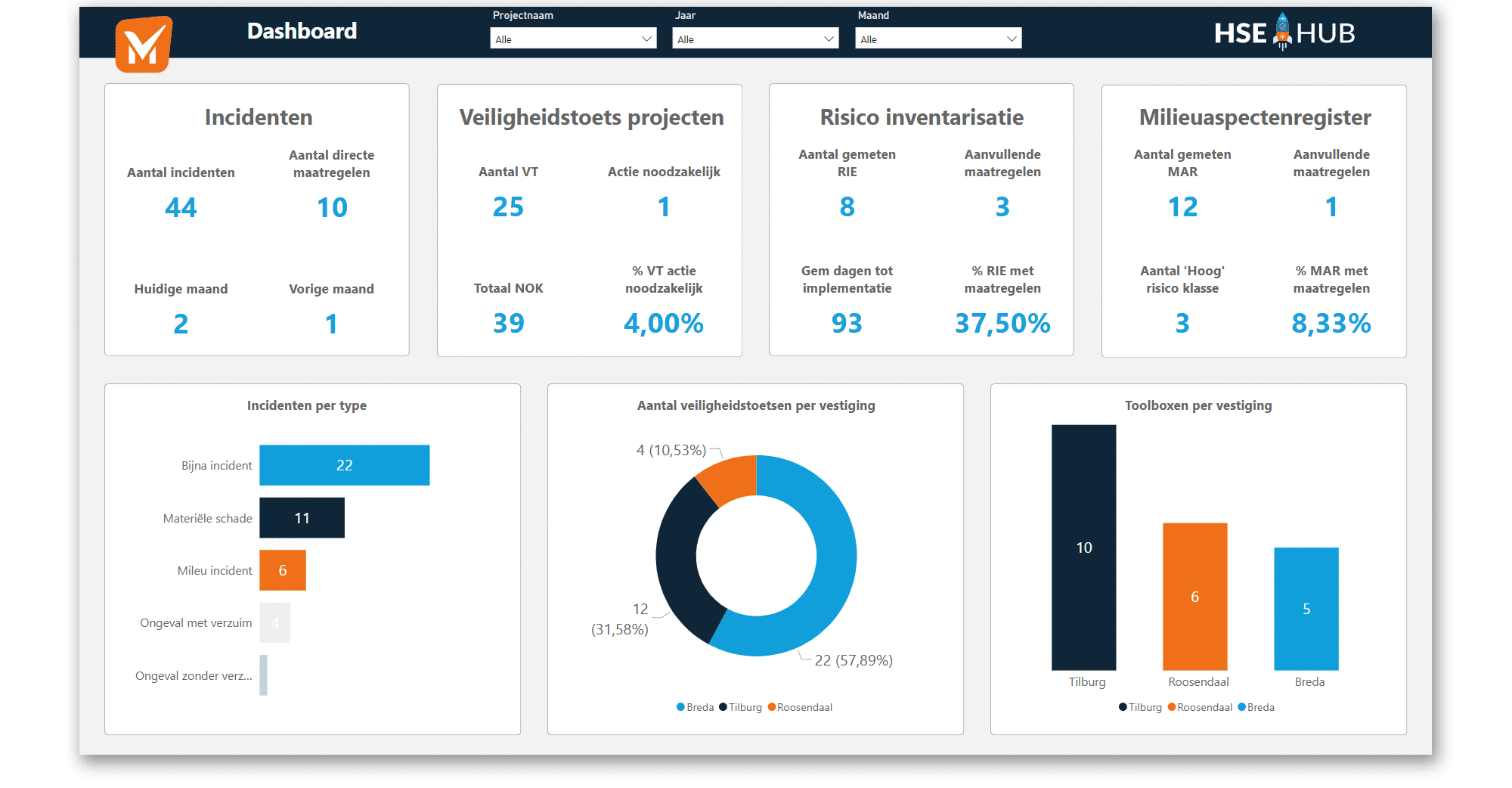
A good practical example is the implementation of the HSE HUB at an organization that was struggling with fragmented HSE processes. By moving to a central digital system, all HSE records were managed more efficiently, leading to real-time monitoring, proactive risk management and a strengthened safety culture within the organization. This shows how digitization can help make an RI&E not only more workable, but also more strategic.
By managing risk inventories and improvement measures digitally, the RI&E no longer becomes a document that disappears into a drawer, but a strategic instrument that actively contributes to continuous improvement.
Where are the opportunities for improvement within your HSE processes? Get practical recommendations tailored to your company.
The benefits of an integrated approach
Combining risk management, quality management and standards intelligently produces immediate benefits:
- Better compliance with laws and regulations, without unnecessary administrative burdens.
- More efficient process management by systematically addressing risks and areas for improvement.
- Improved safety and quality, leading to fewer incidents and higher customer satisfaction.
- Cost efficiency by reducing unexpected disruptions and internal problems.
Make your RI&E a lively and strategic tool
Would you like support in setting up an RI&E that really lives within your organization? Then contact us for a no-obligation introductory meeting with one of our consultants.
Want to know more? Get in touch
Do you have questions or are you curious how LeanForms can support your organization? We are ready to answer all your questions! Get instant specialized advice on the best solution for your specific situation.

Related items
MKG & LeanForms Inspiration Afternoon
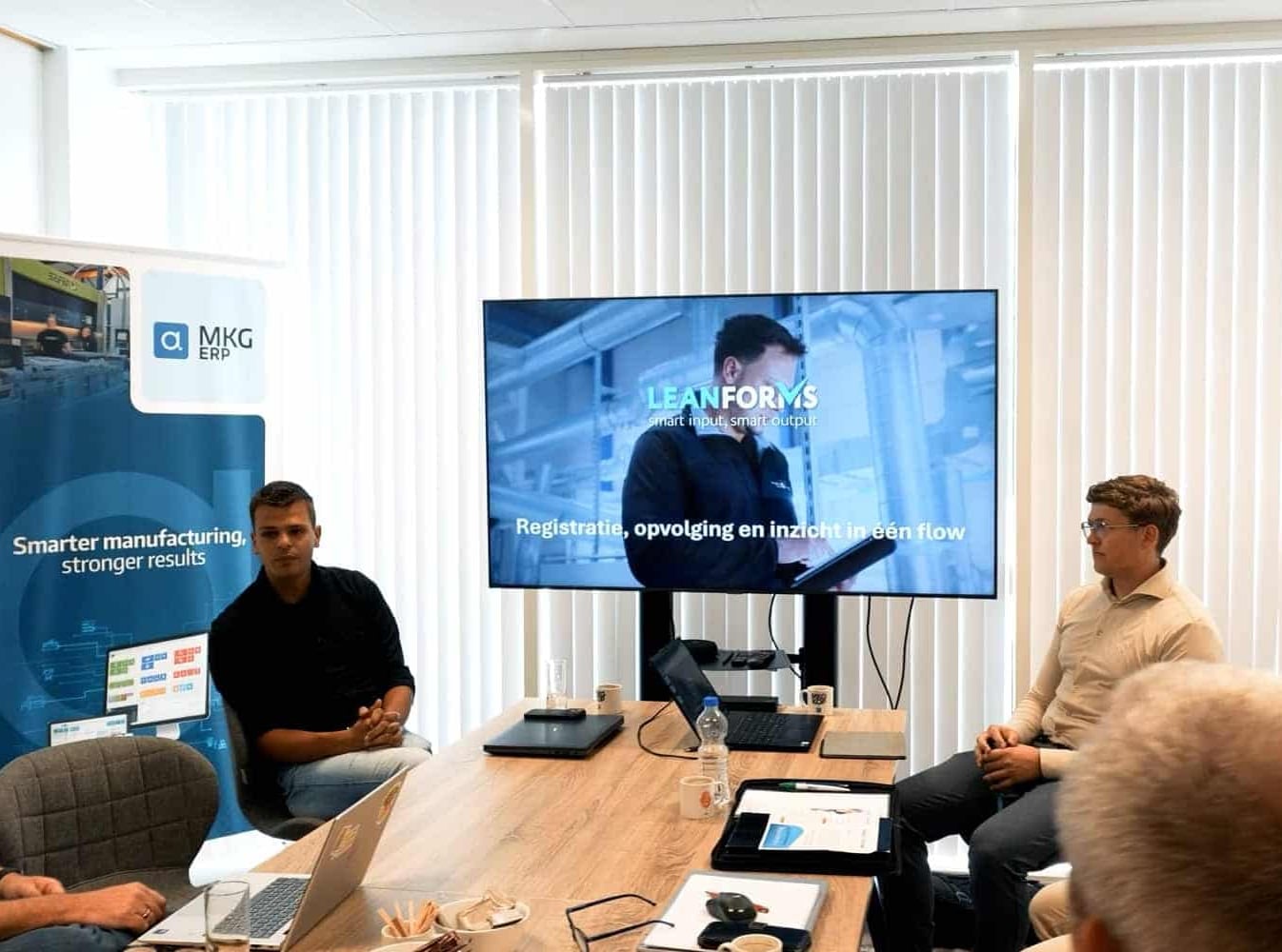
When shop floor data, process knowledge, and systems come together, clarity emerges. This interconnection was the focus of the MKG and LeanForms inspiration afternoon on July 1, 2026. At the Brainport Industries Campus (BIC) in Eindhoven, the discussion centered on how to make information from the field immediately usable within your processes.

Getting a grip on quality and safety: from capturing to improving
We often already record. But improving requires more than just recording.

Advanced workflows step by step
Digitization does not stop at replacing paper forms with a digital alternative. The real gain comes when processes become smarter. Workflows play a key role in this: By setting up digital forms intelligently, the system automatically streamlines the follow-up based on the answers. This gives your organization grip, speed and peace of mind and makes digitization work for you.

Guide to optimizing processes
Process optimization as a continuous improvement process. Process optimization is a continuous improvement process that not every organization is proactively working on yet.