Getting a grip on quality and safety: from capturing to improving
We often already register. But improvement requires more than just recording.
Many organizations have already taken the step towards digitization. Quality, safety and compliance are recorded through, for example, inspections, controls, reports and audits. Nevertheless, in conversations with organizations we regularly hear the same question: We record a lot, but how does this help us to really improve?
The problem is rarely in too little data. It’s in how that data is used.
Attention is increasingly shifting from recording to understanding and adjusting. Registration remains necessary, but recording alone does not provide sufficient grip on quality and safety, for example.
Registration is necessary, but not sufficient
A completed checklist shows that an audit was performed.
A report shows that something went wrong.
An audit report confirms that processes were followed.
What these records often fail to show is consistency. Why certain deviations keep recurring. Where processes slow down structurally. Or where safety risks arise because of a lack of clarity in working methods.
Especially in organizations where quality and safety are important, the risk arises that recording becomes an end in itself. While insights remain fragmented.
From loose forms to process-oriented work
What we see a lot of in practice is that organizations start digitizing from individual needs. A form for inspections. One form for reports. Another one for audits. The result is that data is available, but difficult to interpret. What exactly is an anomaly within this process? When do we speak of an incident here? What definitions do we actually use?
Grip occurs when registrations are not viewed in isolation, but in relation to the process to which they belong.
This does not mean that everything must become insightful at once. What often works well in practice is to start per process. For example, with an inspection process or a reporting process. By unambiguously recording and delineating that process, insight is gained into where registration does not sufficiently match practice.
Insight as a basis for quality and safety
When processes are recorded more consistently, there is room for insight. Not just in numbers, but in patterns. Where do we see repeated deviations, which steps require a lot of repair work, where do safety risks arise from unclear instructions?
These kinds of questions often resonate with quality managers and HSE managers, for example. They are not looking for more reports, but for better understanding of what is happening on the ground. Understanding helps to have the conversation based on what is actually being recorded.
The step from recording to improving links directly to the Check and Act phases of the PDCA cycle. In many organizations, the emphasis is on planning, execution and recording, while analysis and adjustment take place less structurally. Using registrations to analyze patterns and identify causes provides a basis for targeted improvement measures. Without this step, data remains primarily descriptive, while PDCA is intended as a cyclical tool for continuous improvement.
The role of Power BI dashboards in practice
Within LeanForms, we see organizations using Power BI to create this insight. Digital forms and workflows form the basis for this. Power BI helps organize and visualize data across time, locations or teams, making patterns and anomalies more readily apparent.
The value of dashboards is not in the number of graphs, but in the questions they answer. A good dashboard shows where attention is needed. The important thing is to remain realistic about this. Dashboards do not solve problems. They make visible where improvement is possible. The step from insight to action remains people work.
First understand, then expand
A common pitfall is to want to move too fast. Making several processes transparent at the same time, without clear definitions. This creates an overview, but no grip.
An often more effective approach is to first properly understand one process. What data are we capturing. What do we mean by certain terms. What do we actually want to know.
Only when that is clear does it make sense to expand. Then insight grows with the organization, rather than becoming overwhelming.
Steering instead of accountability
Figures are still used in many organizations primarily for accountability. That remains important, too, especially in environments where compliance weighs heavily.
But the same data can also help one look ahead. By using data as a tool for improvement, the role of registration shifts from burden of proof to learning tool.
LeanForms as support
LeanForms supports organizations in digitizing and structuring processes around, for example, quality, safety and compliance.
The power lies in the combination of recording and insight. By recording processes unambiguously and making data available for analysis, room is created for targeted improvements.
LeanForms helps make information transparent so that organizations can make better choices for themselves.
A recent article on Frankwatching describes that measurement gains value only when it leads to meaningful change and does not get stuck in reporting or accountability. For quality and safety, this is not a new insight, but it is a recognizable shift. Registration remains necessary. But organizations that look further are using their data to recognize patterns, see risks earlier and make more conscious choices in their processes.
Ultimately, improvement does not start with dashboards, but with what you want to get a better grip on.
If you look at how quality and safety are currently established within your organization, which process would you want to understand better first before you optimize it further?
Want to know more? Get in touch
Do you have questions or are you curious about how LeanForms can support your organization? We’re ready to answer all your questions! Get expert advice on the best solution for your specific situation.

Related items
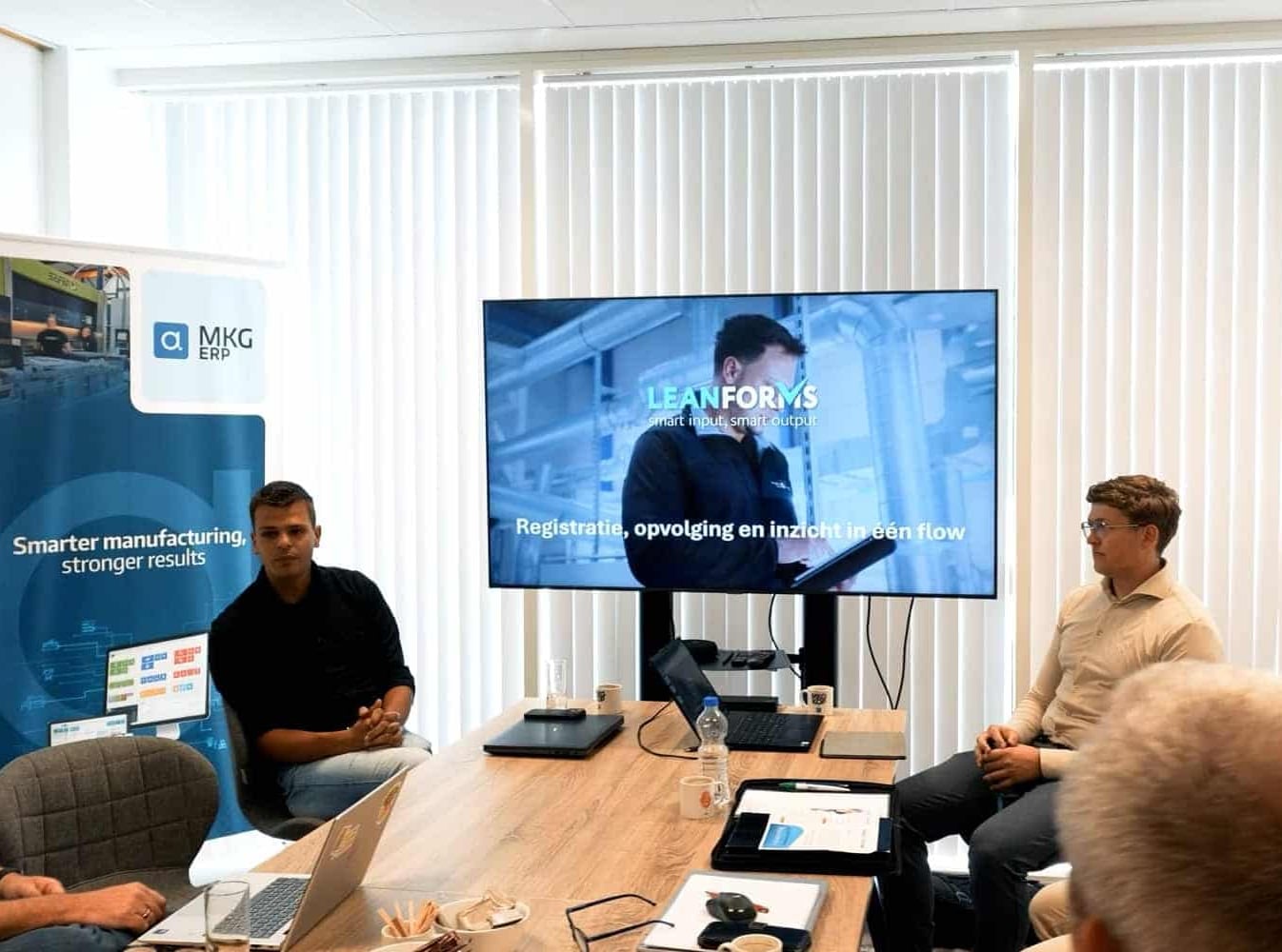
MKG & LeanForms Inspiration Afternoon
When shop floor data, process knowledge, and systems come together, clarity emerges. This interconnection was the focus of the MKG and LeanForms inspiration afternoon on July 1, 2026. At the Brainport Industries Campus (BIC) in Eindhoven, the discussion centered on how to make information from the field immediately usable within your processes.

Advanced workflows step by step
Digitization does not stop at replacing paper forms with a digital alternative. The real gain comes when processes become smarter. Workflows play a key role in this: By setting up digital forms intelligently, the system automatically streamlines the follow-up based on the answers. This gives your organization grip, speed and peace of mind and makes digitization work for you.

Guide to optimizing processes
Process optimization as a continuous improvement process. Process optimization is a continuous improvement process that not every organization is proactively working on yet.

RI&E: What Is It, and How Can You Turn It Into a Dynamic Tool?
An RI&E—which stands for risk inventory and evaluation—identifies the occupational risks within an organization. An action plan allows you to specify which measures are necessary, who is responsible, and when they will be implemented.